Based in Maple Ridge · serving Vancouver & the Lower Mainland
Mon to Sat, 8 to 6
The natural stone experts.
Etching, scratches, chips, cracks and floors that have lost their lustre. Almost all of it can be fixed, and restoring costs a fraction of replacing the stone.
Free estimate, on site, with no obligation.
Family run · second generation
5.0 across 17 Google reviews
Dust-free restoration
Fully insured · WCB covered
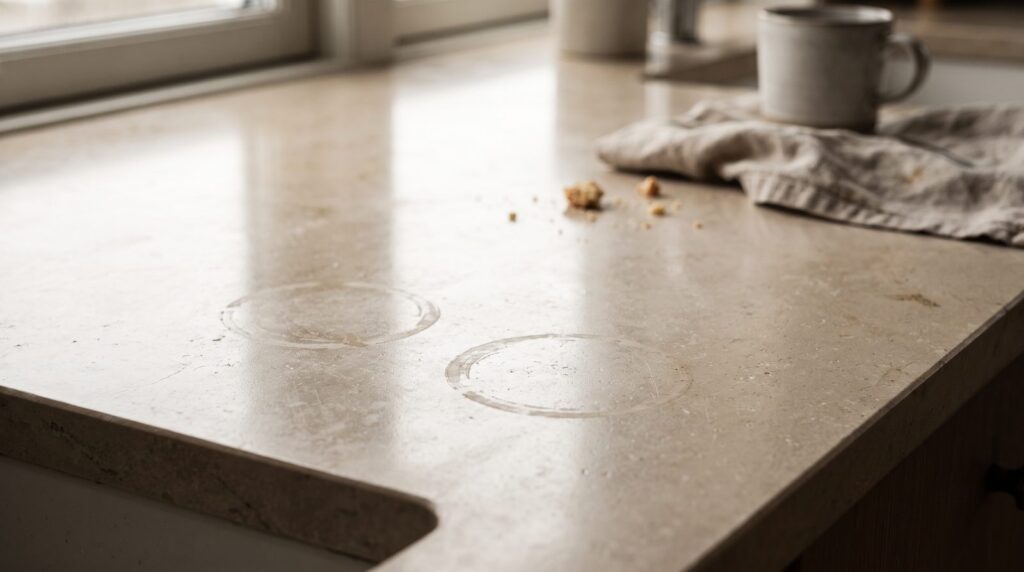
That dull, cloudy ring a glass leaves behind looks like a permanent stain. It usually is not. It is normally an etch, which is damage to the surface of the stone rather than a stain sitting inside it, and etching can be repaired. The tricky part is knowing which one you are looking at.
Homeowner
“There’s a white ring where a glass sat overnight. I’ve tried everything and it won’t come off.”
Homeowner
“The cleaner we used took the shine straight off the counter. Now there’s a dull patch you can see from the door.”
Strata manager
“The lobby floor looks tired and the council keeps asking whether it needs replacing.”
Marble can lose its finish in a variety of ways: wear that scratches the surface, and acid etching from lemon, wine or the wrong cleaner, for example. They look similar and need different work, which is why the first step is working out which one you are looking at.
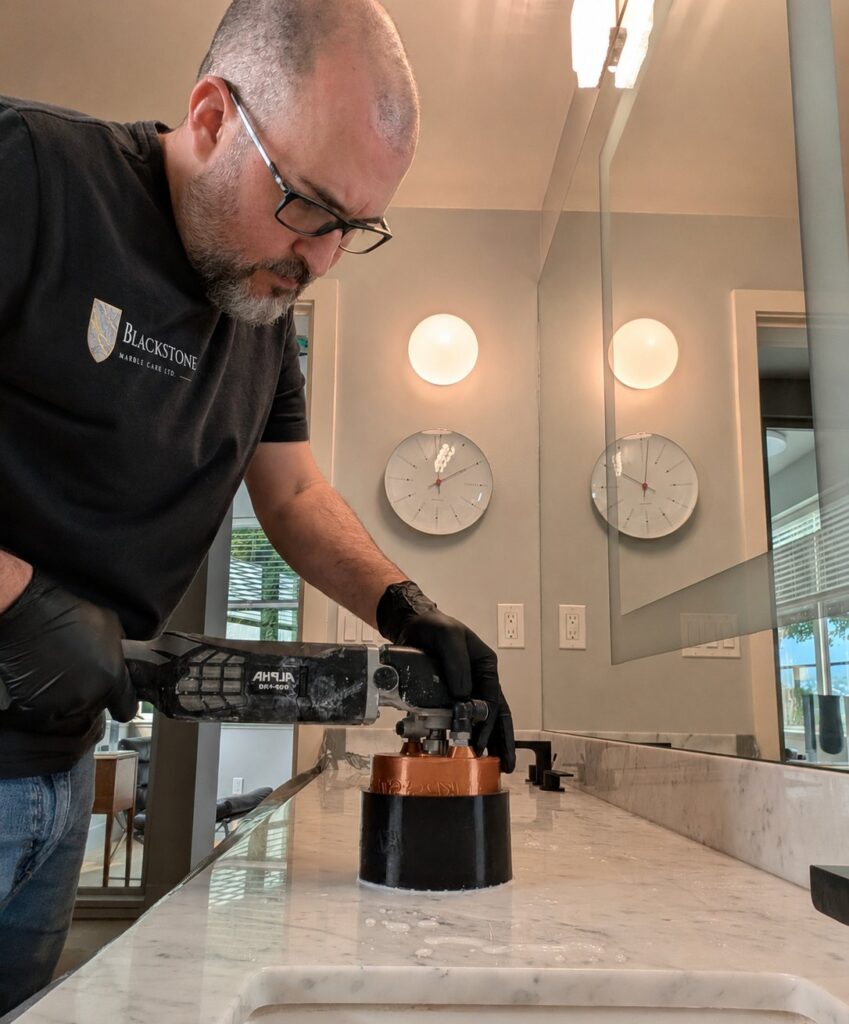
Bringing it back is two stages. Diamond honing takes the surface down past the damage, then the shine goes back on with a polishing powder worked in with water and buffed. That shine comes out of the stone itself. Anything that promises shine from a bottle is sitting on top of the marble, and it washes off unevenly.
If your counters or floors just look tired, honing and re-polishing brings them back, and the bill is nowhere near what new stone costs. You choose the finish too. High gloss is not for everyone, and a honed matte finish hides daily wear better in a busy kitchen.
Not sure what your stone needs? Send a photo or call, and you will get a straight answer.
An etch is eaten into the stone, not sitting on top of it. That is why wiping harder never works, and why it gets mistaken for a stain that will not shift.
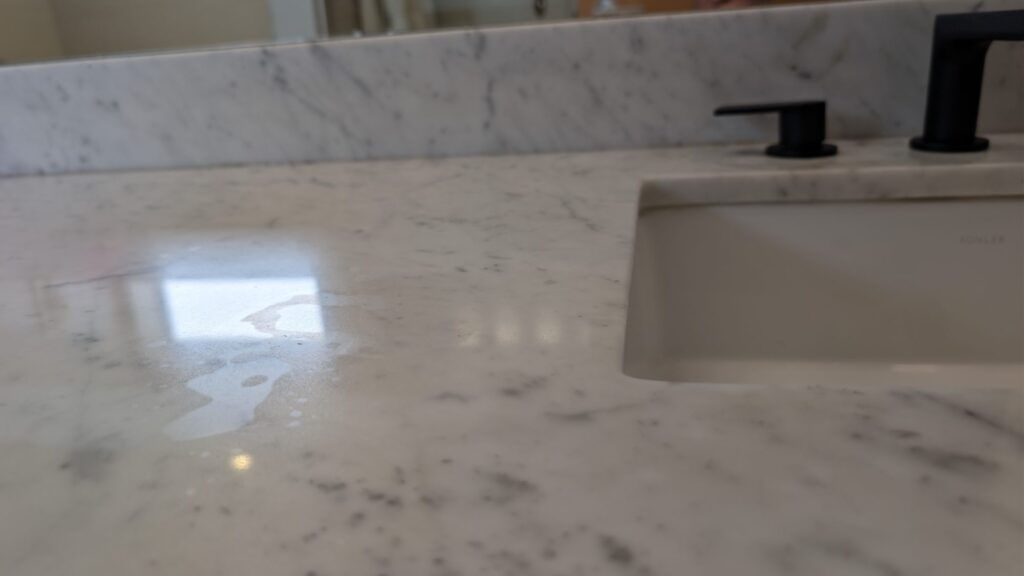
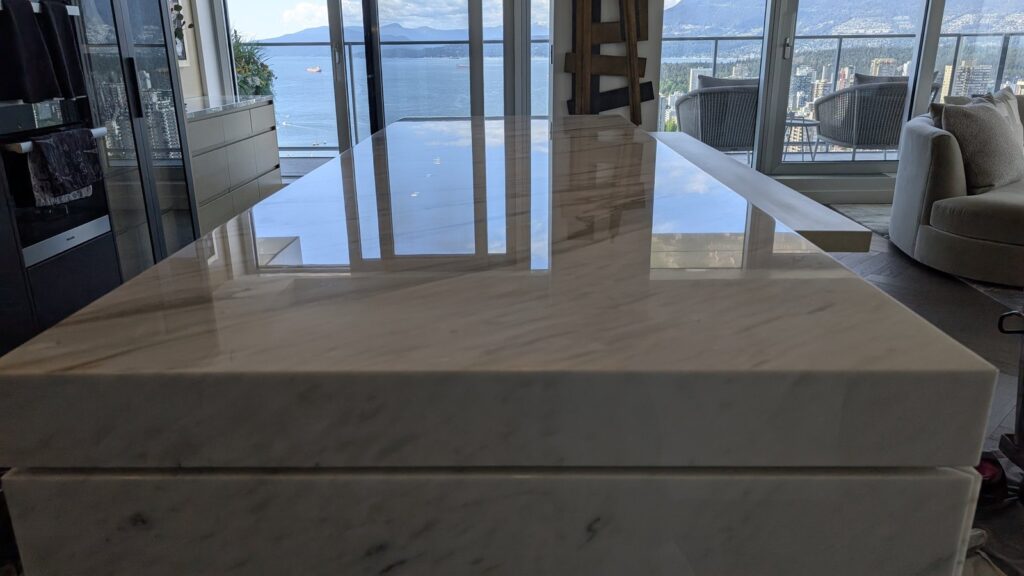
Water rings on marble are what etching is. Someone puts a glass down, the acid in whatever was in it eats the polish, and it shows up as a dull ring. Lemon, wine, vinegar and most bathroom cleaners do the same thing. There is nothing sitting on the surface to clean off, which is why no cleaner will ever touch it.
The fix is mechanical. The etched layer is honed out and the finish brought back, on site. Because a fresh repair looks new, the area around it usually gets refinished at the same time, so the whole surface reads as one rather than showing a bright patch.
It is the call we get more than any other, and the job we are known for.
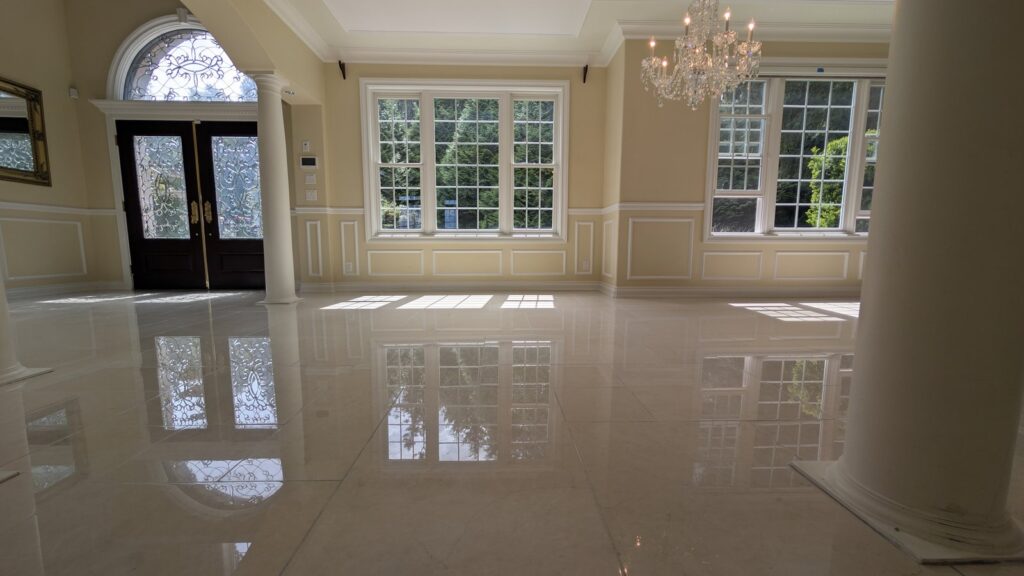
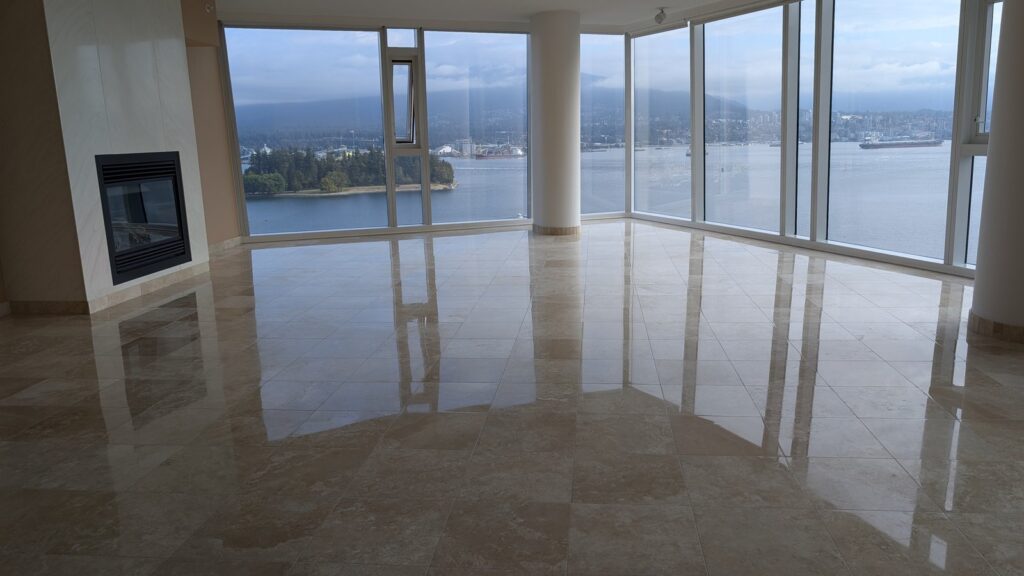
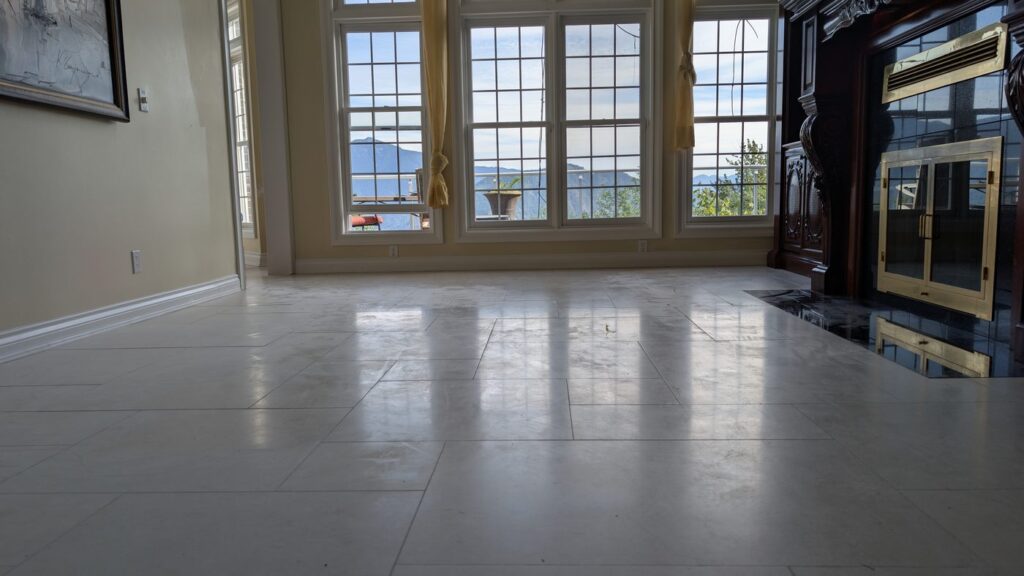
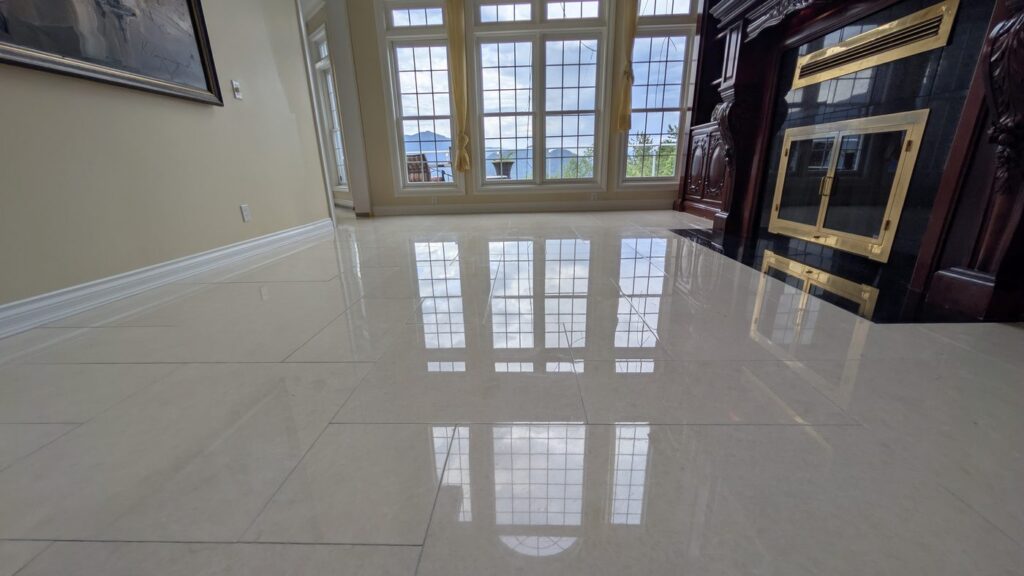
Marble, limestone and travertine floors go dull long before they wear out. Foot traffic drags grit across the surface like fine sandpaper, and the wrong cleaner strips what shine is left. The stone underneath is usually fine.
We hone and polish the floor you already have. If tiles have settled unevenly and you can feel the edges underfoot, that lippage can be ground flat at the same time, so the floor reads as one surface instead of a grid of tiles. The finish is your call: a mirror gloss for a formal entry, or a honed matte that hides traffic in a hallway.
Grinding stone makes dust, so we use water to hold it down and capture what is left at the tool as we work.
A dull floor is also the cheapest one to bring back. The longer wear runs, the deeper the honing has to go.
Etch rings, scratches, chips, cracks and dull patches are almost always repairable in place, on marble, limestone, travertine and granite. The stone is thicker than the damage.
Repairs and restoration are two different jobs. A repair puts back something that is missing: a chip, a crack, or the holes that open up in travertine. It is filled with a colour-matched resin, overfilled deliberately, cured, then ground flat with the surface. Restoration is the whole surface, where scratches and etching are honed out and the dull patches around the sink and the coffee maker come back to match the corners nobody touches.
Most counters need one or the other, and plenty need both, which is why nothing is quoted before it is seen.
Replacing a countertop means fabrication, templating, plumbing, and living without a kitchen while you wait. Restoring the one you have costs a fraction of that.
Every counter is quoted after we have seen it, because two identical counters can hide very different damage. Having it looked at costs nothing.

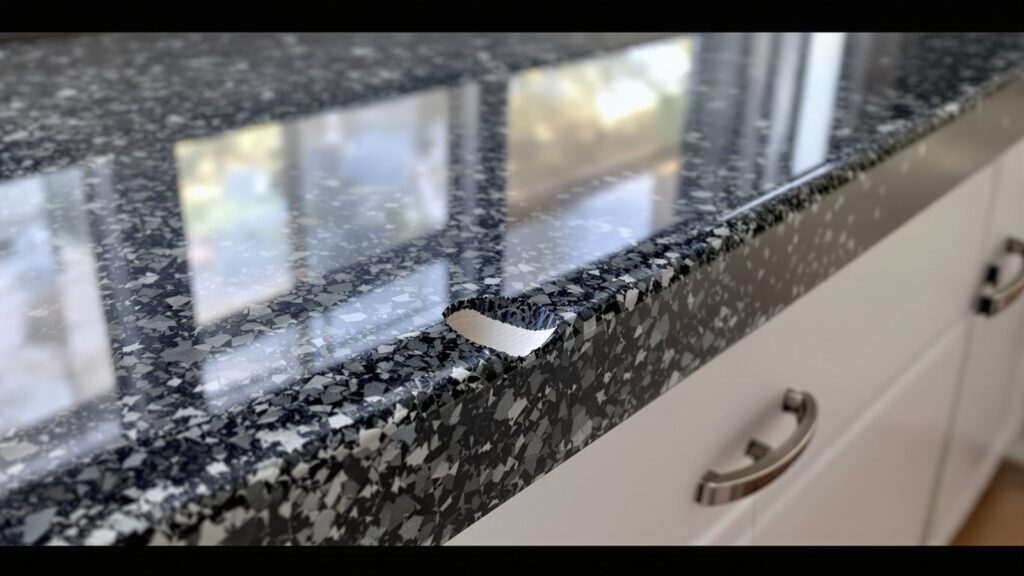
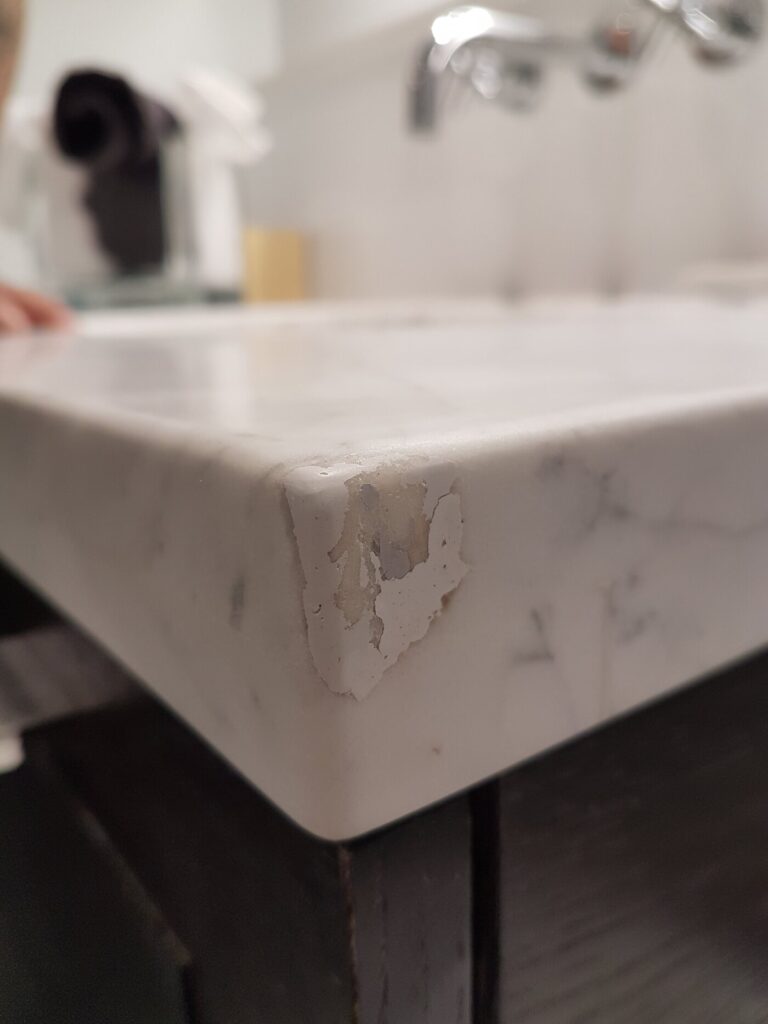
Chips on an edge or around the sink cutout are the most common granite job we see, and they do not need a new countertop. The chip is filled with a resin matched to the colour and pattern of your stone and finished level with the surface.
Granite is hard, and it is more forgiving than marble: it rarely goes dull and rarely stains. What it does not survive is a dropped pot on an edge, or a hot pan set down near the stove, which can start a crack along a vein.
Here is the honest part: a good share of the people who call about granite turn out to have marble or limestone. The stones look alike and behave completely differently. Send a photo and we will tell you which one you have, and what the repair actually involves, before you spend anything.
Lobby stone takes more punishment between November and March than the rest of the year. Winter comes through the front door on people’s shoes: grit that scratches, and salt that eats at the finish. By spring the traffic path is a dull grey lane through the middle of the floor.
We restore and maintain marble, granite and terrazzo floors in hotels and strata buildings across the Lower Mainland, scheduled around your building. Overnight or in the quiet hours, so the lobby is never closed when it matters. Dust is captured at the tool, which your housekeeping staff will appreciate.
For strata councils and facility managers: we are fully insured and WCB covered, and the paperwork is ready before anyone steps on site. A planned maintenance schedule keeps the floor consistent year round, and costs less than letting it slide until restoration is the only option left.
We restore the marble at the Fairmont Chateau Whistler.
More customers call about etch marks than anything else, and removing them without replacing the stone is the work we do most.
Rob runs the business his father Rick built, and brings 26 years in the trade to every job.
Grinding stone makes dust. We use water to hold it down and capture what is left at the tool.
Rob comes out, photographs the surfaces and prices it afterwards. The visit is free, the written quote is emailed to you after it, and there is no obligation to book.
“Rob provided an estimate before doing the restoration. The marble looks beautiful. Professional and meticulous.”
Carol-Ann K. · Vancouver
Don’t replace, restore
Nothing here was replaced.
Before
After
West Vancouver marble floor, worn flat, then honed and polished.
Before
After
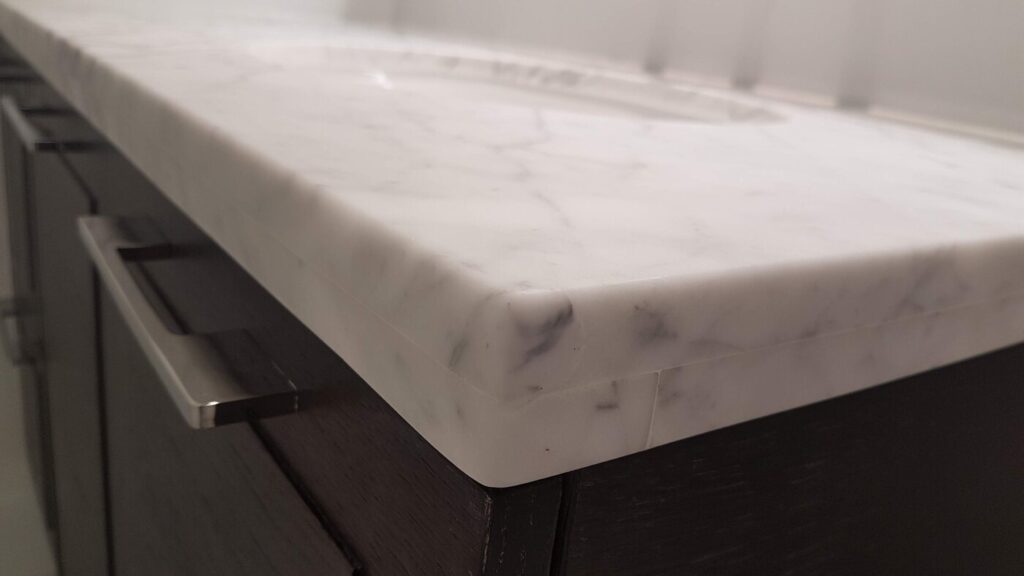
Someone else attempted to fix this corner. We made it better.
Before
After
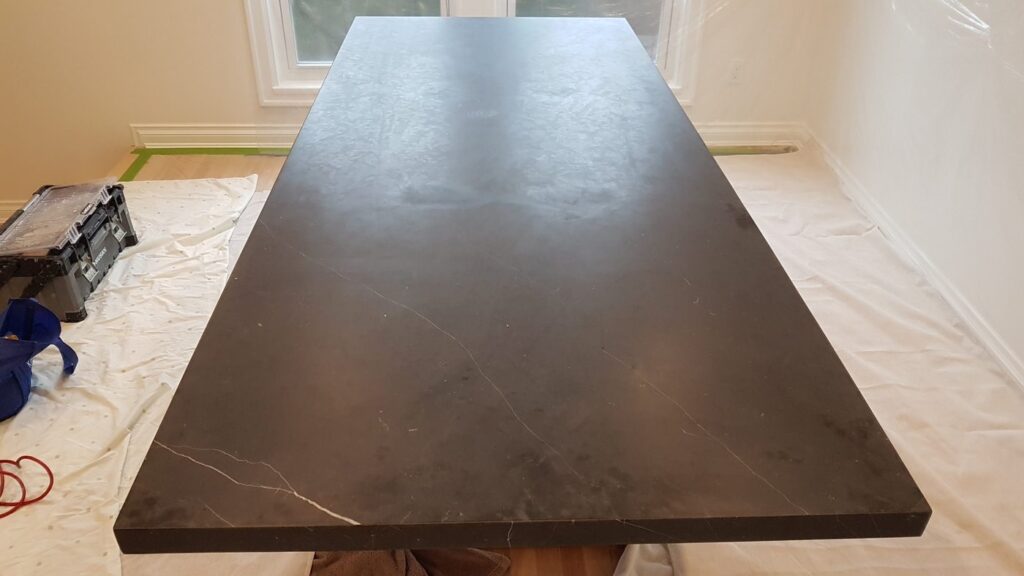
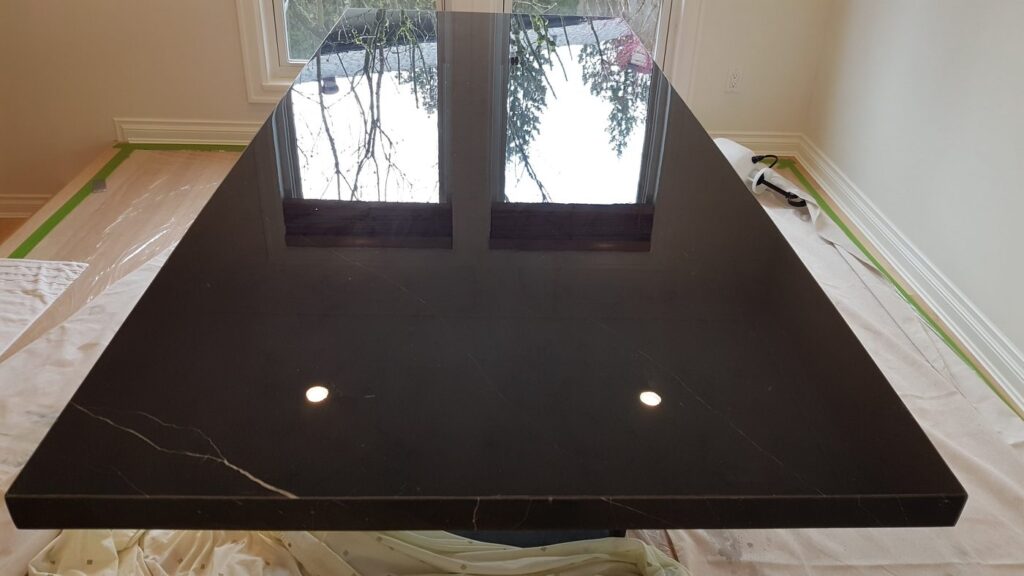
Black marble table, dull and scratched, then honed and polished to a mirror.
Three things and Rob will call you back.
Vancouver, North and West Vancouver, Whistler, Burnaby, New Westminster, Coquitlam, Port Coquitlam, Pitt Meadows, Maple Ridge, Surrey, White Rock, Richmond, and across the Lower Mainland.
Send a photo or call. We will look at it on site and tell you honestly whether it is worth doing.
Free estimate. No obligation.